 Vă invit să vă alăturaţi grupului Facebook Mişcarea DACIA, ce-şi propune un alt fel de a face politică!
Citiţi partea introductivă şi proiectul de Program, iar dacă vă place, veniţi cu noi !
O puteţi face clicând alături imaginea, sau acest link
Archive for Settembre, 2019:
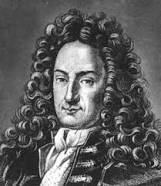
Hyperian History Of The World (18th Century, Part 1) – Leibniz –
Hyperian History Of The World (18th Century, Part 1)
The 17th Century had seen the rebirth of pure rational philosophy, primarily with Descartes and Spinoza, and had also seen the birth of modern science, with Galileo and, primarily, Isaac Newton. Both of these strains of human thought made significant diversions from the religious thinking which had dominated human thought for centuries prior, yet both of these new strains also differed from each other significantly.
The philosophy of Descartes and Spinoza was an expression of rationalism, the idea of deducing conclusions given certain basic principles. Science, however, was an expression of empiricism, of making observations of the world and producing theories to explain those observations. The key difference between these two approaches is that, in rationalism, if the basic principles are correct, the conclusions will absolutely be correct also, but in empiricism, the theories produced to explain the observations will only ever be theories which can never conclusively be proven to be true.
Given this, why was is that science became such a popular way of viewing reality, offering the greatest challenge to religion right up to the present day? The answer was, simply, that science appeared to be more rigorous than philosophy. Philosophy seemed, on the surface, to be mere speculation and, to those who were not natural rational thinkers, it was difficult to see the truth in what was being asserted about reality. Science, on the other hand, had, thanks to Newton, a key weapon up its sleeve – Mathematics. Newton didn’t make speculations about reality, rather, he wrote down specific mathematical formulae to explain his theories. This give science the appearance of being much more rigorous than philosophy and made it easier to understand for the majority of people. Of course, the use of mathematics by science was extremely ironic, given than science was empiricism and mathematics was the purest form of rationalism!
Of course, Descartes had been a great mathematician who understood the necessity of mathematical rigour to any philosophy. However, the mathematics available at the time simply wasn’t advanced enough to truly express his philosophy. Newton, on the other hand, had no such trouble, given that his theories were far more simplistic and required only basic mathematics to express them. Newton became renowned the world over for his theories, yet, unbeknownst to most of the world, he had a great rival, one who began the process of mathematising rationalist philosophy and producing a system of mathematical philosophy which provided the actual truth of reality, rather than the mere approximations of Newton’s theories.
Newton’s rival was the german Gottfried Wilhelm Leibniz, the greatest rationalist of them all and perhaps the greatest genius in our entire history. It is a great tragedy that he is still so unknown to the majority of humanity, whilst Newton is taught to most schoolchildren. Leibniz had a remarkable ability to educate himself in anything he required to further his understanding, as well as the ability to discover all of the flaws in existing systems of philosophy and begin the process of correcting them.
Starting with Descartes’s definition of matter being extended, Leibniz followed the rationality of this definition and saw that matter could always be divided into smaller and smaller units. Anything extended can be split up and made smaller, so the question was, what was the ground state of extended matter? Where did it come from? This led Leibniz to the conclusion that extended matter must somehow be derived from unextended mind. Mind was unextended, therefore ‘units’ of mind could never be further divided, and Leibniz realised that this made them the true basic units of the universe, thereby giving primacy to mind over matter.
For Leibniz, mind and matter were indeed two separate substances, as Descartes had stated, but one was derived from the other, namely matter was derived from mind, thereby making mind the primary substance of the universe. Matter’s being extended didn’t necessarily make it different from mind, but it made it simply the extended form of mind. Leibniz had presented himself with a problem, however. Just as extended matter could always be divided, becoming smaller and smaller, so unextended mind would always be unextended no matter how much of it was added together. The question then was, how did matter come from mind? How did unextended things give rise to extended things? The answer, of course, as Leibniz realised, lay in mathematics.
Taking inspiration from Giordano Bruno, Leibniz envisaged the universe to be primarily made of ‘particles’ of mind called monads. Each monad was an unextended, dimensionless point and the universe constituted an infinite number of monads existing next to one another with no gaps between them. Just as Pythagoras had said, each of these monads was unique and could therefore by represented by a unique number and the universe could therefore be explained in terms of the mathematical relations between these numbers. Leibniz realised that the relations between monads were what gave rise to extended matter. The extension itself was the mathematics of the unextended monads.
This was essentially the same thing that Pythagoras had said, however, Leibniz went even further. Leibniz said that each monad was an unextended, dimensionless point taking up zero physical space. Leibniz was then able to expand this definition after exploring the mathematical nature of the number zero. Leibniz realised that zero actually contained all other numbers. If one adds together every number in existence the result is zero. All numbers, both positive and negative, real and imaginary, cancel to zero when added together. Leibniz therefore realised that each monad contained an infinite amount of mathematical energy, represented by all the possible numbers, which all cancelled down to zero, maintaining the zero value of the monad.
Monads, as units of mind, were, metaphysically speaking, all individual souls, or thinking minds, this thinking being the monad’s subjective experience of the mathematical activity of the energy contained within it. Just as an individual monad is the balance of the infinite energy contained within it, so the whole universe is a balance of the infinite energy of the infinite monads contained within it. The physical world is derived from the mathematical relations between the monads. Each monad performs mathematical operations which it experiences as thoughts. As the monad performs these operations, it begins to reflect on itself, learn about itself and the rest of the universe. Eventually, each monad realises its potential and achieves perfect mathematical balance, meaning that, subjectively, it will know the whole universe, i.e. it will have become God, become perfect.
Leibniz had in fact taught himself mathematics once he realised that it was the subject required to give rigour to his philosophy, saving it from the metaphysical nature of other rationalist philosophies. Once he had taught himself all the mathematics available at the time, an astonishing achievement in itself, Leibniz then realised that more mathematical developments had to be made in order to truly express his philosophy. The first major advancement in mathematics which Leibniz made, was Calculus, the branch of mathematics which basically explores change, extension and dimensions.
Unbeknownst to Leibniz, Isaac Newton had already devised a version of Calculus a few years before Leibniz published his work, although Newton hadn’t published his own work. This led to a dispute as to which of them had actually discovered Calculus, with even accusations of plagiarism being made. Although Newton definitely made the discovery first, his Calculus was difficult to understand, used strange notation and had no real philosophical point. The Calculus of Leibniz, however, had been derived specifically for his philosophical purposes, made far greater sense and used notation which has become the standard for mathematicians ever since.
Unfortunately, even for humanity’s greatest genius, the task of fully mathematicising his philosophy required far more advanced mathematics than even he was able to discover in his lifetime. Perhaps this is why his brilliant philosophy was all but ignored and forgotten by most, whereas Newton became studied the world over. Nonetheless, in 1714, Leibniz published his ‘Monadology’, an amazingly concise outline of his philosophy, although expressed in purely metaphysical terms rather than mathematical.
Perhaps still wary of the scrutiny of the church, or perhaps in an attempt to give his philosophy more relevance to the people of the time (for Leibniz was massively ahead of his time), Leibniz included elements in the Monadology which allow for various concepts which were acceptable to christianity, such as there being a supreme Monad superior to all others (i.e. god). Leibniz had introduced the principle of sufficient reason (PSR) early on in the text (“no fact can ever be true or existent, no statement correct, unless there is a sufficient reason why things are as they are and not otherwise”). If one carefully analyses the Monadology, one will find various points where Leibniz’s reasoning seems to ‘jump’ arriving at conclusions without giving sufficient reasons for them. Can humanity’s greatest genius really have made such errors? Or is there a hidden mystery to the Monadology? Perhaps Leibniz had in fact created a work which, on the surface, appeared to offer a metaphysical philosophy acceptable to christianity, but which, underneath the surface, was in fact a kind of logical puzzle, one which a true rationalist might solve in order to discover the real truth of reality. Be invoking the PSR at all times, one may be able to identify all of Leibniz’s ‘mistakes’ and then begin to ‘correct’ them, thereby bypassing the christian elements and arriving at the real truth of existence.
In 1716, two years after the publication of the Monadology, Leibniz died. His funeral was attended by his personal secretary and a few townsfolk who had known him and his grave went unmarked for 50 years. When Newton died in 1727, his body lay in state before being buried in Westminster Abbey and his funeral was attended by noblemen from across Europe, most of the fellows of the Royal Society and dozens of other mourners. A large monument was built near his grave which is still visited by tourists from all over the world today, while Leibniz goes all but forgotten.
Such was the fate of humanity’s greatest genius. Yet Hyperianism will see justice done, and Leibniz returned to his rightful place at the very pinnacle of human brilliance during the dark times of ignorance and faith. Leibniz wrote, “I have so many ideas that may perhaps be of some use in time if others more penetrating than I go deeply into them someday and join the beauty of their minds to the labour of mine.” As Hyperians, it is our duty to aspire to this great task.
Tags: Leibniz
The Prophets of Truth
The Prophets of Truth
Imagine that humanity’s only true religion has been protected by a small, secret group of people for many thousands of years. All the while, other religions have proliferated, proclaiming themselves “the truth” even though they are utterly false, and capturing millions and even billions in their webs of deceit.
Throughout history, all over the world, the adherents of the false religions have relentlessly hunted down the members of the true religion and tried to exterminate them. But the followers of the true religion have grown skilled at concealment. They have survived every persecution, and have managed to keep recruiting brilliant people – including some of the most famous thinkers and artists in history – who have kept the flame alive.
But why has the true religion failed so spectacularly in the face of the false prophets? Why has the truth struggled to be heard? Can there be anything more horrific than that billions of souls have perished believing in a message that is, in most cases, the opposite of the truth?
Excerpted, page 228
© The Illuminati’s Secret Religion
Artwork by AlmaFa123

Tags: Illuminati
Hermeticism (6)
VII. THE PRINCIPLE OF GENDER
“Gender is in everything; everything has its Masculine and Feminine Principles; Gender manifests on all planes.”–The Kybalion
This Principle embodies the truth that there is GENDER manifested in everything–the Masculine and Feminine Principles ever at work. This is true not only of the Physical Plane, but of the Mental and even the Spiritual Planes. On the Physical Plane, the Principle manifests as SEX, on the higher planes it takes higher forms, but the Principle is ever the same. No creation, physical, mental or spiritual, is possible without this Principle.
An understanding of its laws will throw light on many a subject that has perplexed the minds of men. The Principle of Gender works ever in the direction of generation, regeneration, and creation. Everything, and every person, contains the two Elements or Principles, or this great Principle, within it, him or her. Every Male thing has the Female Element also; every Female contains also the Male Principle. If you would understand the philosophy of Mental and Spiritual Creation, Generation, and Re-generation, you must understand and study this Hermetic Principle. It contains the solution of many mysteries of Life.
We caution you that this Principle has no reference to the many base, pernicious and degrading lustful theories, teachings and practices, which are taught under fanciful titles, and which are a prostitution of the great natural principle of Gender. Such base revivals of the ancient infamous forms of Phallicism tend to ruin mind, body and soul, and the Hermetic Philosophy has ever sounded the warning note against these degraded teachings which tend toward lust, licentiousness, and perversion of Nature’s principles. If you seek such teachings, you must go elsewhere for them–Hermeticism contains nothing for you along these lines.
To the pure, all things are pure; to the base, all things are base.
Excerpt from The Kybalion, Chapter 2, page 12
The Three Initiates
Artwork by Kay Sage

Tags: Hermeticism
Hermeticism (5)
VI. THE PRINCIPLE OF CAUSE AND EFFECT
“Every Cause has its Effect; every Effect has its Cause; everything happens according to Law; Chance is but a name for Law not recognized; there are many planes of causation, but nothing escapes the Law.”–The Kybalion
This Principle embodies the fact that there is a Cause for every Effect; an Effect from every Cause. It explains that: “Everything Happens according to Law”; that nothing ever “merely happens”; that there is no such thing as Chance; that while there are various planes of Cause and Effect, the higher dominating the lower planes, still nothing ever entirely escapes the Law.
The Hermetists understand the art and methods of rising above the ordinary plane of Cause and Effect, to a certain degree, and by mentally rising to a higher plane they become Causers instead of Effects. The masses of people are carried along, obedient to environment; the wills and desires of others stronger than themselves; heredity; suggestion; and other outward causes moving them about like pawns on the Chessboard of Life. But the Masters, rising to the plane above, dominate their moods, characters, qualities, and powers, as well as the environment surrounding them, and become Movers instead of pawns. They help to PLAY THE GAME OF LIFE, instead of being played and moved about by other wills and environment. They USE the Principle instead of being its tools.
The Masters obey the Causation of the higher planes, but they help to RULE on their own plane.
In this statement there is condensed a wealth of Hermetic knowledge–let him read who can.
Excerpt from The Kybalion, Chapter 2, page 12
The Three Initiates
Artwork by Gyuri Lohmuller

Tags: Hermeticism
Hermeticism (4)
V. THE PRINCIPLE OF RHYTHM
“Everything flows, out and in; everything has its tides; all things rise and fall; the pendulum-swing manifests in everything; the measure of the swing to the right is the measure of the swing to the left; rhythm compensates.” –The Kybalion
This Principle embodies the truth that in everything there is manifested a measured motion, to and fro; a flow and inflow; a swing backward and forward; a pendulum-like movement; a tide-like ebb and flow; a high-tide and low-tide; between the two poles which exist in accordance with the Principle of Polarity described a moment ago. There is always an action and a reaction; an advance and a retreat; a rising and a sinking. This is in the affairs of the Universe, suns, worlds, men, animals, mind, energy, and matter. This law is manifest in the creation and destruction of worlds; in the rise and fall of nations; in the life of all things; and finally in the mental states of Man (and it is with this latter that the Hermetists find the understanding of the Principle most important). The Hermetists have grasped this Principle, finding its universal application, and have also discovered certain means to overcome its effects in themselves by the use of the appropriate formulas and methods.
They apply the Mental Law of Neutralization. They cannot annul the Principle, or cause it to cease its operation, but they have learned how to escape its effects upon themselves to a certain degree depending upon the Mastery of the Principle. They have learned how to USE it, instead of being USED BY it. In this and similar methods, consist the Art of the Hermetists. The Master of Hermetics polarizes himself at the point at which he desires to rest, and then neutralizes the Rhythmic swing of the pendulum which would tend to carry him to the other pole. All individuals who have attained any degree of Self-Mastery do this to a certain degree, more or less unconsciously, but the Master does this consciously, and by the use of his Will, and attains a degree of Poise and Mental Firmness almost impossible of belief on the part of the masses who are swung backward and forward like a pendulum. This Principle and that of Polarity have been closely studied by the Hermetists, and the methods of counteracting, neutralizing, and USING them form an important part of the Hermetic Mental Alchemy.
Excerpt from The Kybalion, Chapter 2, page 11
The Three Initiates
Artwork by Svetoslav Stoyanov

Tags: Hermeticism