 Vă invit să vă alăturaţi grupului Facebook Mişcarea DACIA, ce-şi propune un alt fel de a face politică!
Citiţi partea introductivă şi proiectul de Program, iar dacă vă place, veniţi cu noi !
O puteţi face clicând alături imaginea, sau acest link
Hyperian History Of The World (20th Century, Part 5)
Hyperian History Of The World (20th Century, Part 5)
The fracture of humanity was greatly affecting both the arts and the academic world in the 20th century, but it was far more evident in the tumultuous political events of the time. The 19th century had seen a rise in nationalism in the nations of Europe. At the beginning of that century, both Germany and Italy were, as they had been for centuries, collections of smaller city states. By the end of the 19th century, both Italy and Germany had become single, unified nations.
Nationalism in Europe at the time led to each nation taking great pride in their history and culture, but also to each nation trying to outdo the others in terms of industry, economics, technology and, more ominously, weaponry. New weapons technology led to each nation attempting to make for itself the strongest, most powerful armed force that it could. Inevitably, this arms race would lead to war.
European nations had been perennially at war for centuries, but in the 20th century, partly due to these new weapons, warfare would become greater and more terrible than ever before, involving enough nations so as become known as ‘World Wars’.
The first world war began in 1914 when the tensions which had been building between the nations of Europe finally broke. Driven by national pride and eager to serve and defend their country, hundreds of thousands of soldiers were sent off to fight, yet this was the first major war to make use of the new weapons technologies, the effects of which would be terrible. Fighting in the trenches was simply a slaughterhouse, and the insignificance of the initial causes of the war only made the horror all the more senseless.
In 1917 Russia left the war in order to take care of events back home. The Russian Revolution of 1917 was really two revolutions. The first one, in February, saw the people rise up against the ruling Romanov dynasty, one of the old powers of Europe, leading to a confused state of affairs in which numerous factions tried to take control. This led to the second revolution, in October, which was more of a coup by the Bolshevik party led by Lenin. Eventually, inspired by the communism of Karl Marx, Russia and other countries became the Union of Soviet Socialist Republics firstly under Lenin and, after Lenin’s death, under Josef Stalin.
Meanwhile the first world war had ended and Germany, having lost, entered a period of almost poverty. The nationalistic spirit was still very much alive however, particularly in the younger nations of Germany and Italy. This led to the rise of fascism in both of these nations, firstly in Italy under Benito Mussolini, and secondly in Germany with the rise of National Socialism and Adolf Hitler.
Whilst the USSR had become a communist tyranny under Stalin (far from the utopian equality which Marx had imagined), Germany, under the Nazis, took nationalism to the extreme, with Hitler’s ideology being that the German people were the master race and all others were inferior, with particular attention being given to the Jews.
Hitler’s thirst for power (like that of Napoleon over a century earlier) eventually led to the second world war, which began in 1939. As Hitler attempted to control all of Europe and bring it under his control, he was resisted by the Soviet Union and the allied powers, whilst his allies, Japan, after attacking Pearl Harbour in 1941, launched a war in the pacific against the USA. Across the world, violence erupted, but the main war was between the conflicting ideologies of Hitler and Stalin and the fight between Germany and the Soviet Union took violence and horror to another level. The battle of Stalingrad, for example, lasted over five months and more than two million were killed.
Whilst all this was going on, Hitler was also taking his program of racial superiority to its horrifying conclusion. In the course of the war, some twelve million people, half of them Jews, were taken to concentration camps and slaughtered, in what is known as the Holocaust.
In 1945 the Soviets entered Berlin. Knowing that the game was up, Hitler committed suicide and the Nazi regime crumbled. The concentration camps were liberated and the war in Europe ended. Unfortunately, the war in the pacific continued, with the Japanese refusing to surrender. This caused the USA to take drastic action. The major advances in science, particularly in physics, hadn’t failed to be noticed by military forces, and the new science had led to the creation of the most terrible weapon of all, the atomic bomb. Knowing that the Nazis were working on something similar, leading scientists, including Einstein himself who, being Jewish, had fled Germany to the USA, convinced the US government to develop the weapon themselves before the Nazis did. Eventually, as the Japanese refused to stop fighting, President Harry S. Truman ordered the atomic bomb to be dropped on the Japanese city of Hiroshima, although not before dropping thousands of leaflets on the city from the sky informing the people what was about to happen. Nonetheless the city was destroyed and hundreds of thousands killed. Amazingly, the Japanese government still refused to surrender and the US dropped a second atomic bomb on Nagasaki. Finally the Japanese surrendered and the war came to a horrifying end.
Whilst Hitler had killed twelve million in the holocaust and millions more had died in the war, Stalin, who had won the war, wasn’t doing any better at home. His communist regime had become so extreme that any resistance was snuffed out immediately. It is not known exactly how many millions were killed by Stalin and something similar would happen in China, which also adopted communism under Mao. The theme of the century seemed to be mass slaughter.
The conflict of ideologies now led to the ‘Cold War’ between the USA and the USSR. Whilst the Soviets had communism, the USA had capitalism and democracy. No actual war was fought between these two powers, yet the whole world now lived under the constant threat of Nuclear War, with more and more nations developing these terrible weapons.
However, a better result of the cold war was the quest for both of these nations to outdo each other technologically. This was best represented by the ‘Space Race’. Despite the horror of the century’s events, humanity still achieved some wondrous things. In 1961, Soviet astronaut Yuri Gagarin became the first human being to travel into space. After this, US President Kennedy vowed to outdo the Soviets and land a man on the moon. Kennedy was assassinated in 1963, yet the program continued and, in 1969, Neil Armstrong walked upon the moon. This was a truly staggering achievement, one of the greatest human endeavours in history.
The USA had begun as a new power, yet had soon fallen under the sway of all the old powers. Both the USSR and the Nazis had been new powers, but the wrong people had ended up in charge. The success of the moon landing was the result of the right people being put in charge of it and the best, most intelligent and skilled individuals being utilised and their potential unleashed. Imagine a government that was entirely run in such a manner. What couldn’t we achieve?
The political turmoil of the 20th Century showed that humanity was growing tired of the old powers, yet they are still not gone. They have clung to power relentlessly and no new system has been the right one to overthrow them and heal the fracture of the world. But that new system is now here. Neil Armstrong walked on the moon, but we shall go further…
…to the stars.
Brice Merci – Hyperian

“From Arche to Omega Point: An Introduction to Illuminism”
Tags: Illuminism
Hyperian History Of The World (20th Century, Part 3)
Hyperian History Of The World (20th Century, Part 3)
It wasn’t just science that suffered in the 20th century by being sundered from mathematics and philosophy, but those other two disciplines suffered also. Nietzsche had basically destroyed grand philosophy at the end of the 19th century and 20th century philosophy could barely be called philosophy at all. Rather than construct grand systems to explain reality, as had once been the game of philosophers, many 20th century philosophers wasted their time obsessing over pointless little details such as linguistics, as in the philosophy of Ludwig Wittgenstein, activities which would have baffled the great ancient Greek philosophers.
Some philosophers did however turn their attention to mathematics, but in entirely the wrong way. Rather than use mathematics to explain their philosophy, which would have led them to the truth of reality as Pythagoras had asserted twenty five centuries earlier, instead they tried to use philosophy to explain mathematics.
The idea actually originated with mathematicians who, due to their general philosophical illiteracy, were attempting to explain mathematics in terms of a system of axiomatic logic. The idea was to reduce all of mathematics to a set of simple axioms to which basic rules would apply in order to produce the whole of mathematics. This idea was known as Mathematical Formalism, and its most prominent advocate was mathematician David Hilbert, who set mathematicians the task of reducing all of mathematics to a set of axioms, thus reducing mathematics to a system of man-made logic.
A similar idea was taken up by mathematical philosophers Alfred North Whitehead and Bertrand Russell, who also attempted to reduce mathematics to symbolic logic. Their ‘Principia Mathematica’ of 1913 famously featured hundreds of pages of logical symbols just to prove that 1+1=2.
All of these attempts to reduce mathematics to logic were destroyed in 1931 by logical genius Kurt Gödel with his Incompleteness Theorems. Using strict logic, Gödel proved that any axiomatic system could never produce a system that was both complete and consistent. A system derived from multiple axioms will always involve statements that are true, but that cannot be proven to be so by the system itself.
Gödel’s logic was undeniable, and his work showed definitively that Hilbert’s task could never be accomplished, to the dismay of those mathematical philosophers who had been working on it. However, Gödel’s theorems were drastically misinterpreted, such was the chaotic state of academia. For even mathematicians and philosophers had been infected by the epidemic of empiricism which had taken over the academic world since the takeover of science from religion. As such, these mathematical philosophers were unable to view mathematics in its purest rationalist form, the way Leibniz had viewed it, the way Descartes had viewed it, the way Plato and Pythagoras had viewed it. Instead, they insisted on viewing mathematics as some kind of man-made abstraction, hence their attempts to reduce it to man-made logic. After Gödel showed this could not be done, they concluded that mathematics itself was therefore incomplete and inconsistent.
Yet Gödel’s theorems only applied to the false man-made idea of mathematics which these academics had been using. Ironically, it was the philosopher Wittgenstein, who mainly obsessed with linguistic philosophy, who had a better idea about mathematics when he said that mathematics was only ever tautology. For example, to say that 1+1=2 was to say that 1+1=1+1 or that 2=2, i.e. mathematical statements were only ever stating that a certain thing was indeed that certain thing. Wittgenstein concluded therefore that mathematics was nothing other than empty tautology and could never say anything about reality.
Wittgenstein was correct to reduce mathematics to tautology but was wrong to say that this meant it was ‘empty’. The problem with axiomatic systems, which Gödel had shown to be always incomplete or inconsistent, was that they were based on multiple axioms. It is the very fact of there being more than one axiom which causes these systems to fail. As ever, a lack of pure rationalism was the problem. Leibniz would have immediately invoked the Principle of Sufficient Reason and asked questions such as, why should there be multiple axioms? Why would a consistent, logical system be based on a particular, arbitrary number of axioms?
If we take Wittgenstein’s idea of mathematics being nothing but tautology, we realise that all mathematical statements essentially boil down to the most basic tautology, 0=0. If all of mathematics can be reduced to a single statement, we thus realise the mistake that was made by the mathematical formalists. Their mistake was to insist on multiple axioms. Gödel’s Incompleteness Theorems only apply to systems with more than one axiom. If a system has just one axiom, from which everything else derives, then it can be both complete and consistent.
As ever, the ancient Greek philosophers had been right all along, when they had realised that all of reality had to derive from one single substance, or one single idea, the arche, which Pythagoras had declared to be none other than mathematics itself. Thus we can see the extent to which humanity had severely lost its way. These mathematical formalists had completely the wrong idea about mathematics and even when Gödel showed the absurdity of what they were doing, they still got it wrong by interpreting Gödel’s theorems as showing that mathematics could never be complete or consistent, when in fact it is only their idea of man-made systems of axiomatic logic which had been shown to be this way.
True mathematics must be complete and consistent. An isolated logical system is only ever a subset of true mathematics and, if isolated from the whole, will always contain self-referential statements which are the source of its incompleteness or inconsistency. Metaphysically, these ideas have interesting consequences. As individuals, we are like these subsets isolated from the whole. As such, in isolation, we contain ideas of self-reference and this causes inconsistency, incompleteness, errors or gaps in the system and it is these very errors, or gaps, which allow an individual to have free will in a universe which otherwise seems deterministic or machine-like.
We are all part of the whole, which is complete and consistent. Yet, as individuals, we fall foul of Gödel’s incompleteness theorems, which allow us the free will to explore reality. As we do so, we eventually realise that we are both individuals and the collective and, when we realise this, we become complete and consistent.
To understand this requires a unification of science, mathematics, philosophy, metaphysics, psychology and many other subjects into one single system. Unfortunately, the fracture of mainstream 20th century academia was instead leading to absurdities far removed from the truth of reality. But behind the scenes, others were working on the truth, in the tradition of the great ancient Greek philosophers and rational geniuses such as Descartes and Leibniz. Hope was not lost.
Brice Merci ‘ hyperian

The Principle of Sufficient Reason (PSR)
The Principle of Sufficient Reason (PSR)
PSR= „For everything that exist, there is a sufficient reason for why it is thus and not otherwise”
It simply states that everything happens according to Reason and never randomly. In its simplicity is the profoundest thing of all.
We can say that the Principle of Sufficient Reason is the First Cause, or the Prime Mover. It is the origin of all mathematical motion and hence of all motion. A point move through the unit circle ad infinitum and give rise to eternal sine and cosine waves because the PSR mandate it.
So the PSR is pretty much the God Equation stated in words, or a synonymous to ontological math, mind, life and light.
The PSR *seems* simple at first glance – it is “simply” Leibniz’ principle that everything has a sufficient reason (must have a proper, rational explanation). But the *implications* are massive. The PSR is “God” (not in the conventional sense). The entire universe (all of ontological mathematics) can be derived from the PSR, and from its mathematical equivalent, Euler’s Formula.
A corollary of the PSR is Occam’s Razor (the universe takes the shortest, simplest, most economical path – beauty, simplicity, symmetry, order and reason are all indissolubly linked). Leibniz’s principles: The Sameness of Indiscernibles (no two things are identical) and the Law of Continuity (nature makes no leaps) are also necessary consequences of the PSR.
In fact all laws in the universe, all mathematical equations, all ‘scientific’ equations as well (when they haven’t been butchered and misinterpreted by materialism / empiricism) come from the PSR. Some of the most notable logical principles though?
0. PSR = Euler’s Formula
“Nothing exists, or can exist, without a sufficient reason for its existence. For every fact there is a reason why it is so and not otherwise. Nothing comes about arbitrarily. If you can’t state the sufficient reason for a phenomenon then you do not understand it. If something does not have a sufficient reason for its existence then it does not exist.”
1. Occam’s Razor (corollary)
“Occam’s razor is the English equivalent of the Latin lex parsimoniae — the law of parsimony, economy or succinctness. It is a principle urging one to select among competing hypotheses that which makes the fewest assumptions and thereby offers the simplest explanation of the effect.” — Wikipedia
That is, if there is no sufficient reason to complicate things, keep it as simple as possible. The sufficient reason for something will also usually be the simplest reason.”
Ultimate simplicity is the tautology 0 = 0.
2. The Sameness of Indiscernibles
3. Law of Continuity
4. Infinity Multiplier
“Existentially, if one of something is possible then there’s no sufficient reason why an infinite number should not be possible: the conditions that were sufficient for one must also be sufficient for an infinite number. If one is forbidden, all are forbidden. If one is possible, an infinite number is possible because there’s no sufficient reason why any arbitrary limit should apply.”
5. Principle of Least Time
“Fermat’s Principle: ‘Light travels between two given points along the path of shortest time.'”
6. Principle of Least Action
“If something can be done with a minimal effort, what sufficient reason could there be for taking more effort than required i.e. sufficient reason always stands on the side of least action since there’s never any sufficient reason for superfluous action.”
7. The Plenitude Principle
“Everything that can happen will happen eventually. (Existence “begins” as perfect potential and evolves to perfect actualisation, and in doing so it creates God. God does not create existence.
God in fact IS existence in some sense, but requires an evolutionary process in order to actualise himself i.e. to turn all of his potential into actuality.”
8. The Perpetual Motion Principle
“Everything that exists is always in motion. A genuinely stationary state is impossible.”
Monads aren’t static, they’re dynamic – and therefore infinite monads can create spacetime / extension.
It’s impossible for you to be stationary. Even if you think right now you’re ‘sitting down’, you may be moving at 0 speed through space but at *maximum* speed through time.
9. The Plenum Principle
“Everything is filled. There are no gaps. Existence is not limited in any way. There are no boundaries between existence and something else called non-existence. Existence is all there is. Any system that leaves any possibility of any gaps (such as in any materialistic theory) is false. There can be no gaps and no leaps, except in specific mathematical situations.”
10. Principle of Monadic Spacetime
“With his monads, Leibniz considered that he had unambiguously defined existence. The fact is that there is no other entity that can do so. The Plenum Principle states that there can be no gaps in existence and the Perpetual Motion Principle states that everything that exists is always in motion. So, in the light of these principles, the question of existence becomes radically simple and one of pure mathematics. With what shape of “particle” can you unarguably and unambiguously fill all of existence, and keep it filled no matter how the particles move with respect to each other?” (Dimensionless monads.)
God Series book 3 ‘The Last Man Who Knew Everything’ by Mike Hockney goes into more detail on Leibniz, and the logical consequences of the PSR.
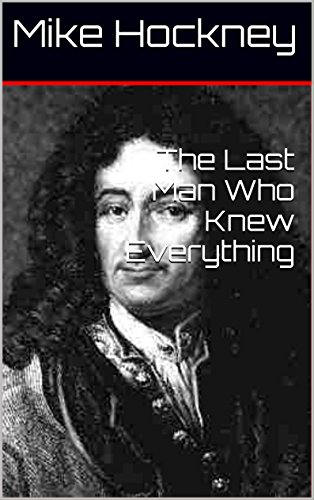
by Alessio Cappelli and Thomas Foster – hyperians
Abstract Zero vs Ontological Zero (∅ vs 0)
Abstract Zero vs Ontological Zero (∅ vs 0)
by Thomas Foster – hyperian
Division by Zero
(N<x> indicates N subscript x)
Empiricist scientists and abstract mathematicians deny that division by zero is possible, but that is a faith-based position and contrary to reason. Division by zero is in fact ontologically valid, and represents the interface between matter and mind.
What is zero divided by zero? Undefinable? Indeterminate? Surely we can do better than that!
Two conflicting arguments are typically advanced for 0 / 0:
[Case 1] 0 / X = 0, therefore when X = 0, 0 / 0 = 0
[Case 2] N / N = 1, therefore when N = 0, 0 / 0 = 1
This kind of arguing comes from failing to understand what zero actually is. There is in fact no discrepancy:
Case (1) is correct for abstract zero: ∅ / X does indeed give ∅ / ∅ = ∅ if X = ∅.
Case (2) is correct for ontological zero: 0<1> / N is a mathematical impossibility due to monads’ indivisibility – if N is finite but NOT if N is monadic (dimensionless).
i.e. N = 0 = 0<1>
When x = 0 is substituted into x(∞<α>) = x/0 [equation E from my previous post “Counting Infinities”] we obtain:
x(∞<α>) = x/0
0(∞<α>) = 0/0
Since 0(∞<α>) = 1,
1 = 0/0
Therefore 0 / 0 = 1.
Ontologically, this makes perfect sense:
0 / 0 = 0<1> / 0<1>
i.e. 1 monad divided by 1 monad equals 1, just as 1 / 1 = 1.
One monad ‘goes into’ one monad exactly one time.
Now, there is a caveat here – we are assuming 0 / 0 means ” 0<1> / 0<1> “.
In certain cases, in calculus for example, 0 / 0 actually represents an unknown number of monads divided by another unknown number of monads. Therefore 0 / 0 would be the equivalent of saying x / y = z; or 0<x> / 0<y> = z (x divided by y could equal anything since we don’t know what the numbers are, and therefore the result could be any number).
Otherwise, when the number of monads is known, division involving quantities of zeroes acts exactly the same as finite division (involving different quantities/multiples of 1).
Example: 0<10> / 0<5> = 2. In this case 0 (the base unit of mind) acts just the same as operations involving 1 (the base unit of matter).
What happens if you split 10 monads into 2 groups i.e. 0<10> / 2 = ?
You get 5 monads. 0<10> / 2 = 0<5>.
OBJECTIONS TO DIVISION BY ZERO:
From Wikipedia:
“With the following assumptions:”
0 * 1 = 0
0 * 2 = 0
“The following must be true:”
0 * 1 = 0 * 2 therefore 0/0 * 1 = 0/0 * 2
“Simplified, this yields:”
1 = 2
Needless to say, the initial assumptions are incorrect:
0 * 1 = 0<1> (one monad)
0 * 2 = 0<2> (two monads)
Therefore 0<1> ≠ 0<2> (One monad does not equal two monads, just as 1 does not equal 2!)
From mathforum.org:
“Division by zero is an operation for which you cannot find an answer, so it is disallowed. You can understand why if you think about how division and multiplication are related.”
12/6 = 2 because 6*2 = 12
12 / 0 = X would mean that 0 * X = 12
“But no value would work for X because 0 * X = 0. So X / 0 doesn’t work.”
Wrong!
For abstract zero, it is true that ∅ * X = ∅. (“Non-existence” is not affected by multiplication).
However 0 * X ≠ 0 (ontological zero can be multiplied, monads are COUNTABLE).
Therefore:
12 / 0 = 12(∞<α>) i.e. finite matter to dimensionless mind.
0 * 12(∞<α>) = 12 i.e. infinite monads ‘making up’ matter.